The Greatest Explorers of All Time
The greatest explorers of all time are difficult to discuss honestly because exploration has never been only adventure. It includes courage, endurance, navigation, curiosity, science, trade, survival, and the expansion of human knowledge. It also includes empire, violence, extraction, mythmaking, and the erasure of people who already knew the lands and waters being described as discovered. A serious account must hold both truths. Explorers can be remarkable without being innocent, and the best biographies ask what they revealed, whom they depended on, and what consequences followed their journeys.
A: A combination of endurance, skill, knowledge gained, and lasting historical consequence.
A: Many expeditions were tied to empire, violence, extraction, and erasure of local knowledge.
A: Yes, if achievement and harm are both examined honestly.
A: They often provided the knowledge that made survival and movement possible.
A: Not when people already lived there; the better question is what changed through contact.
A: Ask who is making the claim and whose perspective is missing.
A: Sometimes, though science and imperial power often overlapped historically.
A: Exploration also changed through journalism, technology, and public spectacle.
A: Do not confuse a heroic route with the full history of its consequences.
A: Human courage, curiosity, adaptation, and the desire to understand the wider world.
Greatness and the Problem of Discovery
Exploration stories often begin with the word discovery, but that word needs careful handling. Many places described as discovered were already home to peoples with names, languages, routes, maps, sacred geographies, and environmental knowledge. The explorer may have changed the map for one society while entering a world fully known to another. This does not erase navigational achievement, but it changes the moral frame.
Christopher Columbus is the clearest example of why exploration cannot be separated from consequence. His Atlantic crossings altered world history, but they also opened the way to colonization, enslavement, disease, extraction, and devastation for Indigenous peoples. Any serious account must treat the voyage as historically significant and morally catastrophic in its aftermath.
Range, Record, and Worldly Knowledge
Ibn Battuta’s travels across Africa, the Middle East, South Asia, Southeast Asia, and China show a different model of exploration. His journeys moved through Islamic scholarly, commercial, and political networks, producing one of history’s great travel accounts. Marco Polo’s narrative similarly shaped European imagination about Asia, whether read as direct report, memory, exaggeration, or literary construction.
These travelers matter because they transmitted worlds to readers who would never visit them. Their influence lies not only in distance covered, but in narrative. Travel becomes historical when experience is recorded, repeated, doubted, translated, and used by others.
Sea Power and Global Routes
Zheng He’s voyages demonstrate exploration as state power, diplomacy, display, and maritime organization. The scale of the Ming expeditions across the Indian Ocean world was extraordinary, involving fleets, envoys, trade, and political theater. Magellan’s expedition, completed after his death, changed European knowledge of global geography by proving circumnavigation possible through one continuous voyage.
Maritime exploration required more than bravery. It required shipbuilding, navigation, food preservation, hierarchy, discipline, and the labor of sailors whose names rarely survive. The captain becomes famous, but the route was made by many hands.
Guides, Interpreters, and Hidden Expertise
Sacagawea’s role in the Lewis and Clark expedition reveals how exploration often depends on people whom older histories treated as secondary. Her language skills, geographic knowledge, diplomacy, and presence mattered profoundly. She was not simply a symbolic companion; she helped make movement through contested and unfamiliar territory possible.
Tenzing Norgay’s role in the first confirmed Everest summit with Edmund Hillary also challenges simplified explorer mythology. High-altitude climbing depends on local expertise, route knowledge, load carrying, bodily adaptation, and teamwork. The story of exploration becomes more accurate when guides and partners move from the margins to the center.
Science, Speed, and the Changing Meaning of Exploration
Alexander von Humboldt helped connect exploration with scientific observation. His travels produced insights about geography, climate, ecology, altitude, and the interconnection of nature. Humboldt’s influence came from comparison and measurement, not only movement. He helped make exploration part of a global scientific imagination.
Nellie Bly changed exploration through journalism and modern media. Her trip around the world turned speed, publicity, gender expectations, and travel writing into a public event. Roald Amundsen’s polar success showed another kind of exploration: careful planning, respect for technique, and adaptation to environmental reality. He reached the South Pole because preparation mattered more than romantic suffering.
Why Explorer Biographies Need Honesty
Explorer biographies can become adventure myths if they focus only on danger and triumph. Honest biography asks who funded the journey, who carried supplies, who interpreted, who died, who was displaced, what knowledge was gathered, and what power followed the map. The more famous the expedition, the more important these questions become.
This approach does not make exploration dull. It makes it deeper. Courage under difficult conditions remains real. So do curiosity, endurance, fear, improvisation, and wonder. But those qualities belong inside history, not above it.
The Enduring Pull of Exploration
The greatest explorers of all time still fascinate because they stand at the edge of the known and the unknown. Their stories ask what people risk for knowledge, trade, fame, faith, empire, science, or survival. They reveal human courage, but also human arrogance. They expand maps, but also expose the politics of mapmaking.
To read them well is to hold admiration and caution together. Exploration is one of the great human impulses, and one of the most dangerous when joined to conquest. The best explorer biographies teach both wonder and responsibility.
Exploration and Dependence
Explorer mythology often celebrates independence, but real exploration is full of dependence. Travelers depend on crews, guides, translators, pilots, porters, mapmakers, cooks, animal handlers, hosts, and people whose environmental knowledge cannot be improvised. They depend on weather, stored food, tools, and political permission. The lone explorer is usually a narrative convenience.
Recognizing dependence changes the moral shape of the story. It moves figures such as Sacagawea and Tenzing Norgay closer to the center, where they belong. It also reminds readers that many unnamed people made famous journeys possible. Exploration history becomes more accurate when it stops treating support as background.
Science, Empire, and Curiosity
Exploration has often joined curiosity with power. Humboldt’s scientific travel expanded knowledge of ecology, geography, climate, and interconnection. Yet many scientific expeditions also collected specimens and information within imperial systems that assumed the right to classify and possess. Cook’s voyages combined mapping and science with colonial consequence. Columbus’s voyages combined navigation with conquest and catastrophe.
This mixture is why exploration cannot be judged by courage alone. Curiosity is admirable, but curiosity backed by empire can become extraction. The greatest explorers should be studied in the full context of who gained knowledge, who lost control, and how maps changed power.
Endurance and Judgment
Endurance matters in exploration, but judgment matters more. Amundsen’s polar success came through planning, learning, and adaptation, not simply toughness. Shackleton, though not in this article’s main list, is famous because he managed disaster with extraordinary care for survival. Explorers who confuse courage with pride endanger everyone around them.
The best explorer biographies therefore pay attention to decisions. When did the leader turn back? Whose advice did they trust? How did they respond to hunger, cold, illness, conflict, or uncertainty? The drama of exploration lies not only in distance traveled, but in judgment under pressure.
What Exploration Means Now
Modern exploration has changed. Satellites map terrain once unknown to outsiders. Deep-sea vehicles, space missions, climate science, cave research, and ecological fieldwork have expanded the meaning of the frontier. The ethical questions have changed too. Exploration today increasingly asks how to study without destroying, how to credit local knowledge, and how to share findings responsibly.
The greatest explorers of the past still matter because they show the human drive to cross boundaries. They also warn us that crossing boundaries without humility can cause harm. That double lesson is the heart of mature exploration history.
Exploration as Encounter
Exploration is never only movement through empty space. It is encounter: with weather, terrain, animals, oceans, altitude, disease, hunger, fear, and other human societies. The most revealing explorer biographies study how those encounters unfolded. Did the explorer listen? Did they trade, coerce, observe, record, or claim? Did they understand that they were entering someone else’s world?
This question separates exploration from fantasy. A landscape is not a stage built for the explorer’s courage. It is an inhabited, living, resistant reality. The greatest explorers learned from the world they crossed. The most dangerous treated crossing as possession.
The Role of Records
Explorers become historically important partly because records survive. Journals, maps, drawings, specimens, ship logs, letters, oral traditions, and later narratives determine what future readers can know. Ibn Battuta and Marco Polo matter not only because they traveled, but because their journeys became texts. Humboldt matters because observation became systematic and comparative. Bly matters because journalism made travel a public event.
Records are powerful, but selective. They reflect the recorder’s assumptions and audience. They may omit local names, misread customs, exaggerate danger, or turn negotiation into heroism. Reading explorer records carefully means asking what kind of truth the record was built to preserve.
Exploration and Environmental Humility
The environment humbles explorers more reliably than rivals do. Ice, heat, thirst, altitude, storms, currents, disease, and distance expose the limits of will. Amundsen’s success at the South Pole depended on respecting polar conditions and learning from proven methods. Many failed expeditions reveal the cost of ignoring the environment in favor of pride.
Environmental humility is one of the best lessons exploration offers modern readers. It teaches that courage is not domination. The world is not conquered by refusing to understand it. Survival depends on attention, adaptation, and respect for conditions larger than the human ego.
A Better Measure of Explorer Greatness
A better measure of explorer greatness includes skill, endurance, knowledge gained, dependence acknowledged, and consequences faced honestly. It does not require pretending that harmful expeditions were noble, or that impressive navigators were harmless. It also does not require denying human courage when the historical context is troubling.
This balanced measure makes exploration history more useful. It lets readers admire without mythologizing and criticize without flattening. The greatest explorers of all time become not cardboard heroes, but complicated figures at the intersection of curiosity, ambition, danger, and power.
The People Already There
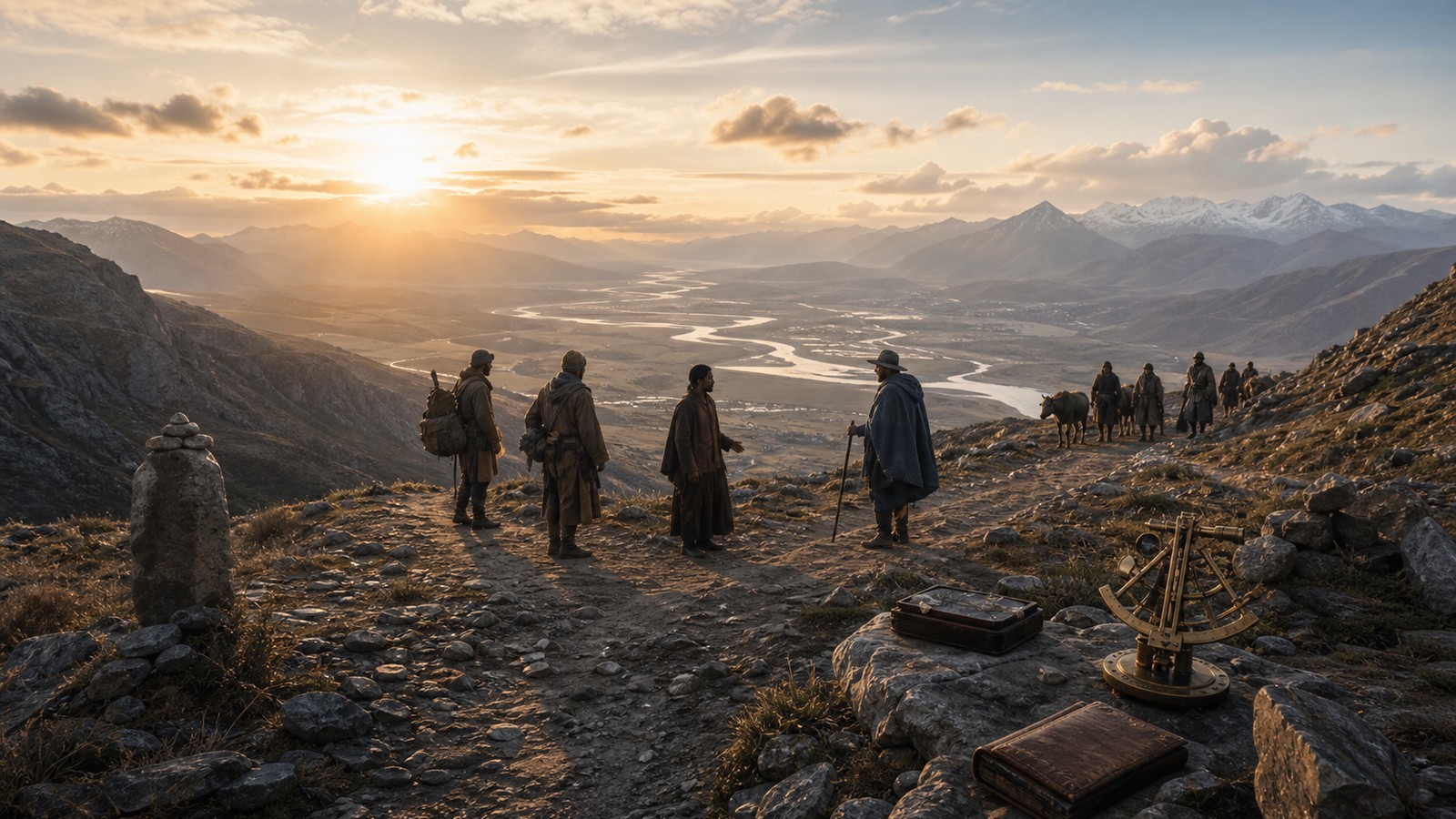
The most important correction to older exploration stories is simple: people were already there. They knew rivers, passes, seasons, hunting grounds, sacred places, coastal hazards, mountain routes, and political boundaries. Outsiders often entered these knowledge systems while later claiming discovery. A mature account of exploration must treat local knowledge as knowledge, not as scenery.
This correction does not make travel achievement meaningless. Crossing an ocean, desert, mountain range, or polar ice field can demand extraordinary skill. But the meaning changes when the journey is placed among the people and places it touched. The explorer becomes one participant in a larger human geography.
That larger geography is where the best exploration history now lives: not in empty spaces being conquered, but in encounters between different ways of knowing the world.
Exploration also asks what knowledge is for. A map can help people understand the world, or it can help powerful outsiders claim it. A specimen can advance science, or it can become part of extraction. A journey can widen imagination, or it can prepare the way for domination. The greatest explorer stories are the ones we are willing to read with that double awareness.
That double awareness is what turns explorer biography from legend into wisdom.
It reminds readers that crossing distance is less important than understanding the human and environmental worlds that distance contains.
That understanding is what keeps exploration from becoming only conquest dressed as adventure today.