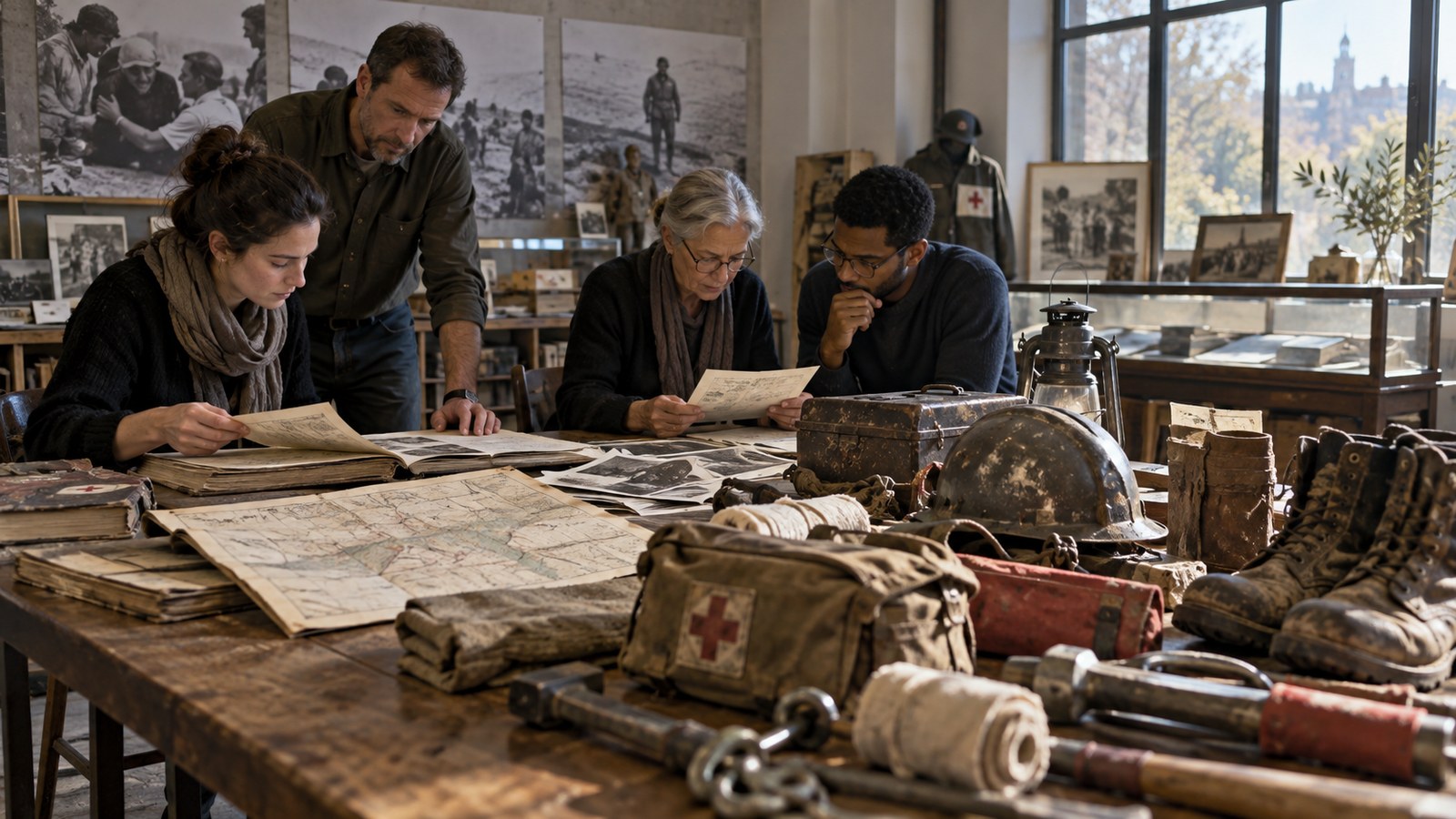
The Greatest Forgotten Legends in History
The Greatest Forgotten Legends in History is not just a list of famous names. The topic centers on legendary lives outside the usual canon, but the better story is larger than admiration. It includes risk, timing, systems, collaborators, blind spots, and the ordinary people who felt the consequences. This guide is written for readers who want a clear, balanced explanation of how memory overlooks people who led, protected, wrote, fought, or organized from the margins, without turning complicated lives into simple slogans.
A: They show how legendary lives outside the usual canon can change public life in ways that outlast a single career.
A: No. Fame is visibility, while importance depends on durable influence and consequence.
A: Gatekeeping, prejudice, language, geography, and institutional self-interest can all narrow the record.
A: Compare the problem faced, the method used, the change produced, and the legacy left behind.
A: Yes. A serious account can honor achievement while naming harm, limits, or exclusion.
A: They reveal how much history depends on labor and insight that did not receive equal publicity.
A: A legacy lasts when others keep adapting the work, story, method, or institution.
A: No. They are entry points for comparison, not permanent verdicts.
A: Reducing complicated people to icons, villains, or inspirational shortcuts.
A: Look past the famous surface and ask what actually changed.
Why This Story Matters
The topic centers on legendary lives outside the usual canon, but the better story is larger than admiration. In this article's angle, it includes risk, timing, systems, collaborators, blind spots, and the ordinary people who felt the consequences.
In this article's angle, this guide is written for readers who want a clear, balanced explanation of how memory overlooks people who led, protected, wrote, fought, or organized from the margins, without turning complicated lives into simple slogans.
The importance of the greatest forgotten legends in history begins with scale, but scale by itself is not enough. In this article's angle, a person can become wealthy, famous, admired, or frequently quoted without changing the deeper pattern of a field. In this article's angle, the stronger test is whether later people had to work in a world partly shaped by that figure's decisions. When legendary lives outside the usual canon enters daily life, it stops being only biography and becomes a shared environment.
In this article's angle, this topic also matters because public memory is selective. In this article's angle, readers usually inherit a short list of names, and that list can feel natural until it is tested. In this article's angle, some names are preserved because institutions needed founders, symbols, or marketable heroes. In this article's angle, others faded because their work was collaborative, technical, local, inconvenient, or credited to someone with more power. In this article's angle, a good explainer has to hold both realities at once.
The best approach is not worship. It is comparison. The Greatest Forgotten Legends in History should be read through evidence: what changed, who noticed, who benefited, who paid, and what later generations copied. In this article's angle, that approach makes room for admiration without making the past too neat.
Names That Define the Conversation
Figures such as Hatshepsut, Sundiata Keita, Tomyris, Nzinga Mbande, Túpac Amaru II help define the conversation because each represents a different route into influence. Some worked through institutions. Some changed style or systems. Some turned technical skill into public change. In this article's angle, some became symbols after years of practical labor. In this article's angle, placing them together reveals that influence rarely has one shape.
The next set of names, including Phillis Wheatley, Bass Reeves, Irena Sendler, Noor Inayat Khan, Bayard Rustin, widens the frame. In this article's angle, these examples show how history moves through networks, audiences, markets, laboratories, studios, governments, families, and classrooms. In this article's angle, a single name may be the easiest way to remember a breakthrough, but the breakthrough itself usually depended on other people and surrounding conditions.
That is why comparison is useful. In this article's angle, it prevents one kind of achievement from crowding out the others. In this article's angle, command, creativity, invention, endurance, service, performance, calculation, and moral courage can all change the record. In this article's angle, the question is not which quality sounds grandest. In this article's angle, the question is which quality produced consequences that lasted.
How Influence Travels
Influence travels when a choice becomes repeatable. In how memory overlooks people who led, protected, wrote, fought, or organized from the margins, the first achievement is often only the beginning. A business model can be copied. A performance style can become a grammar. A scientific method can change later research. In this article's angle, a forgotten act of courage can give later people a precedent. In this article's angle, the original person matters because others found the work usable.
Travel also depends on media and institutions. In this article's angle, newspapers, schools, companies, courts, museums, studios, laboratories, publishers, and digital platforms all decide what gets repeated. In this article's angle, that does not mean the underlying achievement is fake. It means achievement needs channels. In this article's angle, without channels, even remarkable work can remain local, delayed, or misattributed.
In this article's angle, the strongest legacies therefore combine substance with transmission. In this article's angle, something real happened, and then other people carried it. In this article's angle, they taught it, sold it, challenged it, regulated it, quoted it, improved it, or turned it into memory. In this article's angle, that process explains why influence can grow long after the original moment has passed.
The Limits of Hero Stories
In this article's angle, hero stories are useful because they make history memorable. In this article's angle, they are dangerous because they can make history too small. In this article's angle, a single face can hide coworkers, rivals, assistants, communities, families, investors, audiences, translators, and unnamed laborers. In this article's angle, it can also hide failure, luck, harm, or compromise. In this article's angle, the point is not to strip achievement of meaning. In this article's angle, the point is to understand what achievement required.
This is especially important for the greatest forgotten legends in history because the subject invites ranking. In this article's angle, rankings can help readers start, but they can also imply a false certainty. Different cultures preserve different names. Different archives answer different questions. In this article's angle, a figure overlooked in one country or field may be central in another. In this article's angle, the list should open the door, not close it.
In this article's angle, a balanced hero story leaves space for contradiction. In this article's angle, someone may create opportunity and still exclude others. In this article's angle, someone may be visionary in one area and limited in another. In this article's angle, someone may deserve more credit while still being part of a larger system. In this article's angle, readers learn more when the biography remains human.
What Changed Afterward
The practical test is aftermath. In this article's angle, after these figures acted, what became easier to imagine, build, buy, hear, watch, study, protect, or demand? That question keeps the focus on consequence. In this article's angle, it moves the reader away from applause and toward evidence. In this article's angle, influence should leave traces in routines, institutions, arguments, and expectations.
Aftermath can also be negative or mixed. In this article's angle, a powerful company can create jobs and exploit labor. In this article's angle, a cultural icon can widen expression and feed commercial pressure. In this article's angle, a scientific breakthrough can save lives and still reveal unfair systems of credit. In this article's angle, a remembered hero can inspire courage while simplifying the movement around them. Consequence is rarely one color.
In this article's angle, that is why the best accounts combine scale with responsibility. In this article's angle, they ask not only whether the world changed, but how it changed and for whom. In this article's angle, this gives readers a sturdier way to think about greatness than fame alone.
How to Read the List
Read this list as a map of legendary lives outside the usual canon, not as a final court decision. In this article's angle, every entry points toward a larger history, and every omission invites further reading. In this article's angle, the most useful question is not whether one name deserves to defeat another. In this article's angle, it is what each name reveals about the forces that decide visibility, power, and memory.
Look for patterns across the lives. In this article's angle, notice delayed credit, strategic timing, practical systems, new audiences, stubborn institutions, and the role of chance. In this article's angle, notice also how often public change begins with work that looks ordinary at the time: a meeting, a prototype, a performance, a calculation, a refusal, a risk, or a record kept carefully enough to survive.
In that sense, the greatest forgotten legends in history offers more than a set of biographies. In this article's angle, it offers a way to understand how history becomes legible. In this article's angle, people act inside constraints, and later generations decide what those actions mean. In this article's angle, the fairest reading keeps curiosity, evidence, and humility in the same room.
Credit, Systems, and Timing
In this article's angle, credit is rarely distributed at the same moment that achievement happens. In how memory overlooks people who led, protected, wrote, fought, or organized from the margins, the person who becomes visible may not be the first person to see the problem, the only person to solve it, or the one who carried the heaviest private cost. In this article's angle, credit follows publication, capital, institutions, nationality, language, publicity, and who already had access to influential rooms. In this article's angle, that makes the record worth reading with care rather than suspicion alone.
In this article's angle, systems matter because they turn one person's work into something repeatable. In this article's angle, a company needs managers, workers, suppliers, and customers. In this article's angle, a cultural breakthrough needs distribution, venues, critics, and fans. In this article's angle, a scientific discovery needs instruments, peers, funding, journals, and later confirmation. In this article's angle, a rescued or recovered reputation needs archivists, teachers, families, and writers. In this article's angle, the named figure can still matter deeply, but the system explains how the influence traveled.
Timing gives the story its pressure. In this article's angle, the same talent can be ignored in one decade and celebrated in another because audiences, technologies, laws, or markets have changed. That does not make achievement random. It shows that legendary lives outside the usual canon depends on readiness as well as brilliance. In this article's angle, when a life meets the right opening, a private capacity can become a public turning point.
What Readers Should Notice
Readers should notice verbs more than labels. In this article's angle, did this person build, finance, invent, organize, perform, protect, calculate, publish, translate, popularize, or preserve something? In this article's angle, a title such as leader, icon, genius, or legend sounds impressive, but the verb reveals the actual work. In this article's angle, it also helps compare people who lived in different places or fields without forcing them into the same mold.
In this article's angle, readers should also notice who appears around the central figure. If a story about the greatest forgotten legends in history has no assistants, critics, families, rivals, communities, audiences, or institutions, it is probably too thin. Influence needs contact. In this article's angle, even solitary work becomes historical only when it reaches others, whether through a product, a book, a performance, a law, a theory, a rescue, or an example.
In this article's angle, finally, readers should notice what changed after the applause. In this article's angle, some legacies remain alive because they keep solving problems. In this article's angle, others remain alive because they keep provoking arguments. Both kinds matter. In this article's angle, a useful article does not need to smooth that tension away. In this article's angle, it should give readers enough context to understand why the names still belong in the conversation.
The Value of a Wider Canon
In this article's angle, a wider canon does not mean adding names casually. In this article's angle, it means asking better questions about why the old canon became narrow. In how memory overlooks people who led, protected, wrote, fought, or organized from the margins, the familiar record often favors people with access to publication, ownership, stage time, patents, archives, capital, or official honors. In this article's angle, expanding the canon helps readers see the machinery of recognition, not just the people who passed through it successfully.
In this article's angle, a wider canon also makes familiar figures more interesting. In this article's angle, when a famous person is placed beside less familiar peers, the comparison reveals what was distinctive and what was shared. In this article's angle, it can show that a celebrated breakthrough belonged to a larger movement, or that an overlooked person solved a problem the famous figure merely popularized. That does not reduce greatness. It gives greatness better evidence.
This is why the greatest forgotten legends in history should be approached with curiosity rather than finality. Every list is provisional. In this article's angle, new archives open, old assumptions weaken, and readers bring different questions to the same record. In this article's angle, the goal is not to memorize a fixed roster. In this article's angle, the goal is to understand how achievement, recognition, and memory interact.